Does higher screen open area always mean better performance?
No. Higher open area can provide more nominal passage area, but the result depends on aperture size and shape, media thickness, feed distribution, particle behavior, blockage and the condition of the screen deck. A comparison that ignores wear or blinding may rank panels incorrectly for the actual duty.
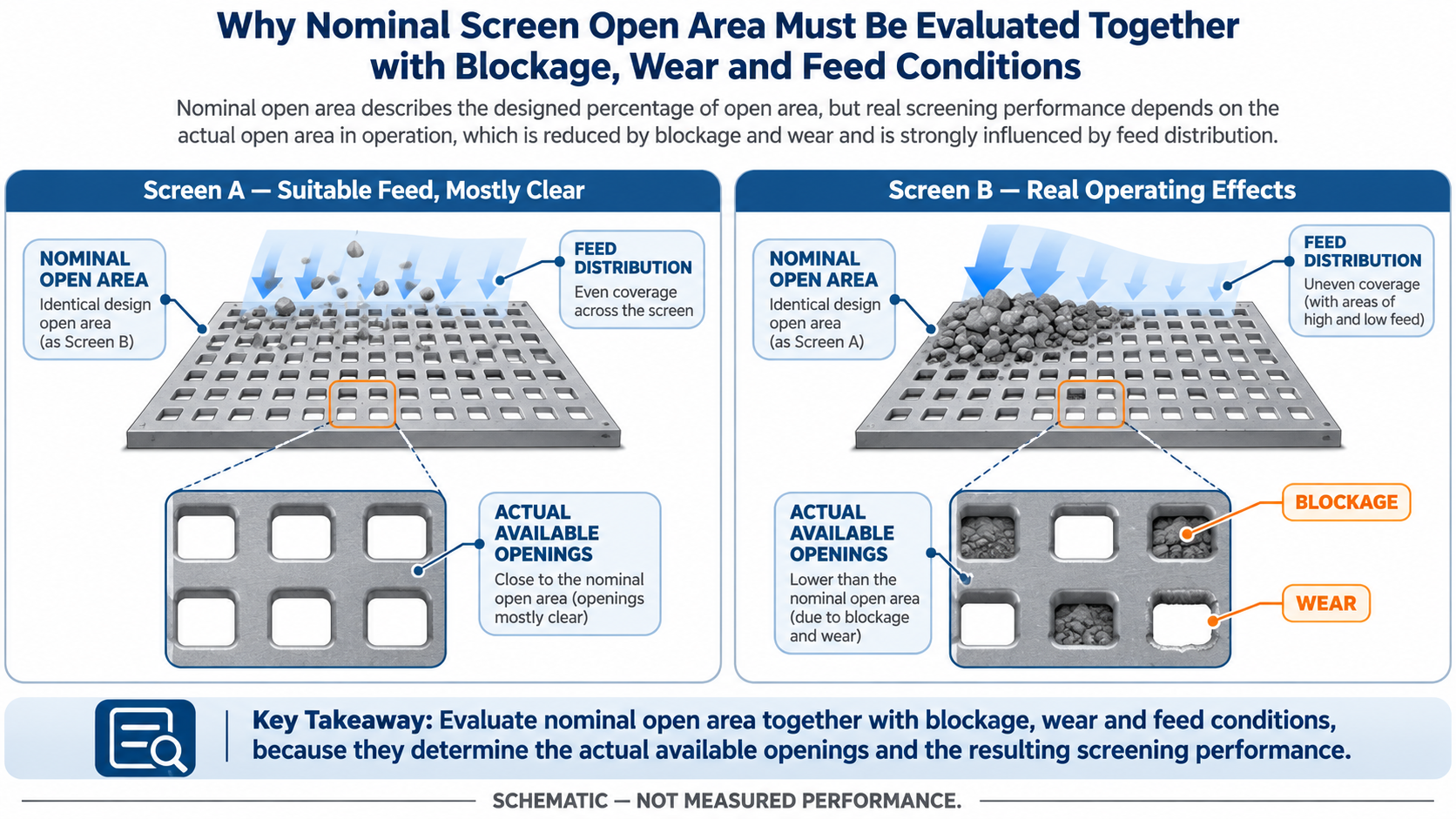
This article helps procurement and process teams compare replacement options without treating a single specification as a performance guarantee. Use the same screen position, feed and measurement method when comparing alternatives.
What does open area tell a buyer?
Open area is the proportion of the screening surface made up of apertures. It is a useful design descriptor, but it is not a direct measure of throughput, separation efficiency or wear life. Two panels with similar open-area percentages can have different opening shapes, thicknesses, support patterns and effective screening behavior.
Ask the supplier how the value is defined and which panel area is used in the calculation. Confirm whether the quoted value covers the whole panel or only an active region. Also check if blank areas, molded supports or reinforced zones are included.
Which factors should be compared alongside open area?
Compare the factors that control both passage and durability in the application:
| Factor | Buyer check | Why it matters |
|---|---|---|
| Aperture | Width, length, shape, direction and tolerance | Affects separation and near-size passage |
| Media thickness | Measured or drawing-controlled thickness | Can influence opening geometry and wear allowance |
| Feed | Size distribution, shape, abrasiveness, moisture and impact | Determines how the deck is loaded |
| Blockage | Type, location, frequency and cleaning history | A nominal opening may not remain available in service |
| Support | Rail spacing, contact profile, cross-members and condition | Unsupported or worn areas can affect panel behavior |
| Wear | Location, pattern, removed mass or documented service interval | Shows where durability is needed and how the panel changes |
| Process objective | Cut size, product quality, recovery or drainage target | Defines what the screen must achieve |
Metso's selection guidance discusses aperture, wear, media material and thickness as related considerations. The handbook's figures are supplier guidance, not a universal HUATAO specification. Metso mineral-processing handbook.
How can wear change the comparison over time?
Wear can change aperture dimensions and panel geometry, so a new-panel specification may not describe the opening that operates after use. Inspect panels by zone and record where wear begins, how it progresses, and whether the opening changes affect product quality or process decisions.
Do not compare one supplier's advertised wear life with another's unless the feed, screen position, duty, failure definition and observation period are comparable. A responsible trial record should include installed date, operating hours or tonnage if reliably measured, feed conditions, maintenance events, panel position and the reason for replacement.
The screen life and wear review frames wear as an observation tied to duty, while the cost-per-tonne framework explains how to include purchase, replacement and downtime inputs when comparable records exist.
How should a buyer run a fair comparison?
First define the decision: improve sizing accuracy, reduce blockage, protect a high-wear zone, or reduce change-out effort. Do not combine several objectives into one pass/fail claim.
Then agree a controlled comparison:
- Confirm the drawing, aperture, fixing and deck position for each option.
- Record baseline feed and operating conditions.
- Select measurable indicators such as blocked-opening observations, product-size samples, wear measurements or change-out time.
- Set observation dates and acceptance limits with the responsible plant team.
- Record deviations, cleaning, repairs and process changes.
- Review the result before making a fleet-wide change.
If the options use different materials or aperture geometry, label the trial as a design comparison rather than a direct material-only comparison. Check safety and equipment procedures before inspection or change-out.
Frequently asked questions
Is open area the same as screening efficiency?
No. Open area describes aperture area relative to a panel area. Screening efficiency is a process result and depends on feed, equipment, aperture, operating conditions and measurement method.
Can a thicker panel have lower open area?
It can, depending on the design, but thickness alone does not determine open area. Request a controlled drawing or datasheet for the exact panel configuration and confirm the measurement basis.
Should I choose the panel with the highest published open area?
Not without checking the target cut, support pattern, feed and wear requirements. A higher nominal value may not address blockage or durability in the installed zone.
How do we compare wear life between suppliers?
Use comparable applications and define the replacement criterion. Record operating hours or processed tonnage when available, feed condition, panel zone, wear measurements and downtime. Unsupported life claims should not be treated as comparable evidence.
Can one screen deck use different media by zone?
Some modular systems allow different panels in different locations, but the machine design and approved configuration govern. Review support, fixing, process goals and maintenance controls before mixing panel types.
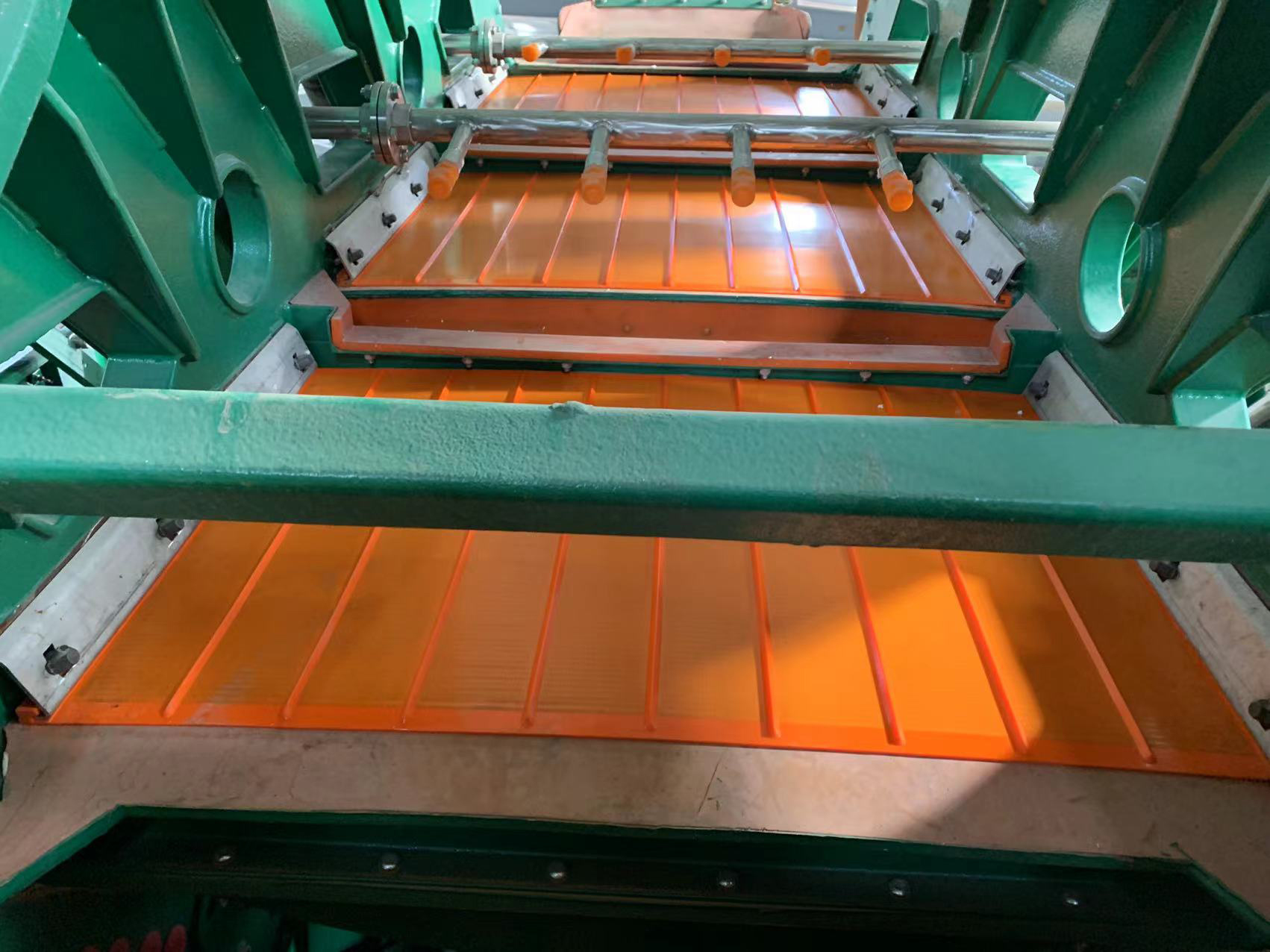 Polyurethane fine screen panels